
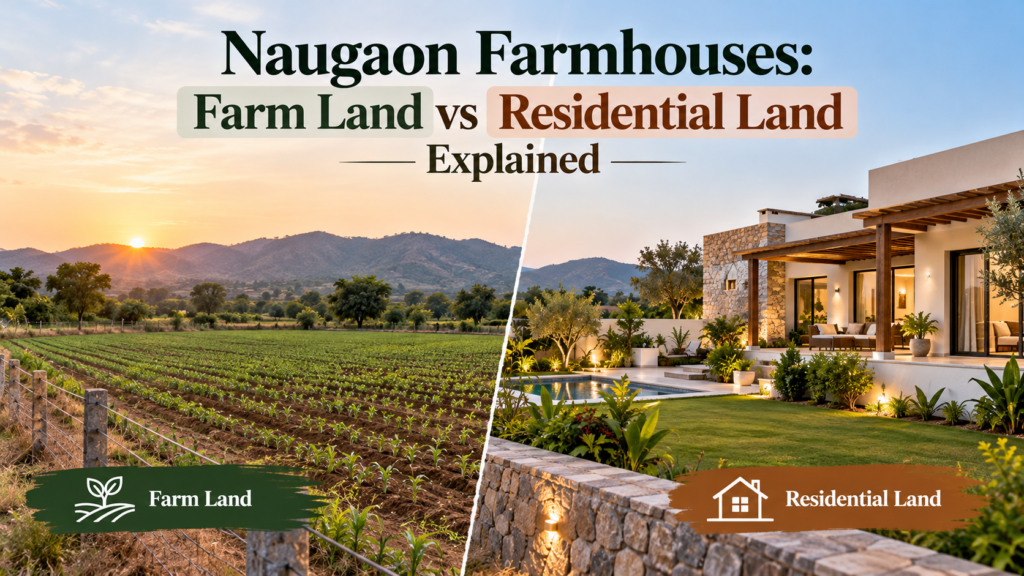
Here’s a question that trips up a lot of first-time buyers in Naugaon: when someone mentions “farm land” versus “residential land,” what actually separates the two, and why does it matter so much for what you’re allowed to build? This distinction isn’t just bureaucratic paperwork, it genuinely affects what kind of home you can legally construct, how the property can be used, and even how smoothly you’ll be able to sell or transfer it down the line.
Let’s break this down simply.
Why This Classification Exists in the First Place
Land in India isn’t a single, uniform category. It’s classified based on its intended use, agricultural, residential, commercial, and each classification comes with its own set of rules about what can legally be built or done on that land. This system exists partly to protect agricultural land from being converted haphazardly, and partly to ensure residential construction happens on land that’s actually suited and approved for it.
For a buyer in Naugaon, understanding which classification your plot falls under isn’t a minor technicality, it directly determines whether your plans for the property are even legally possible.
What Farm Land Actually Means
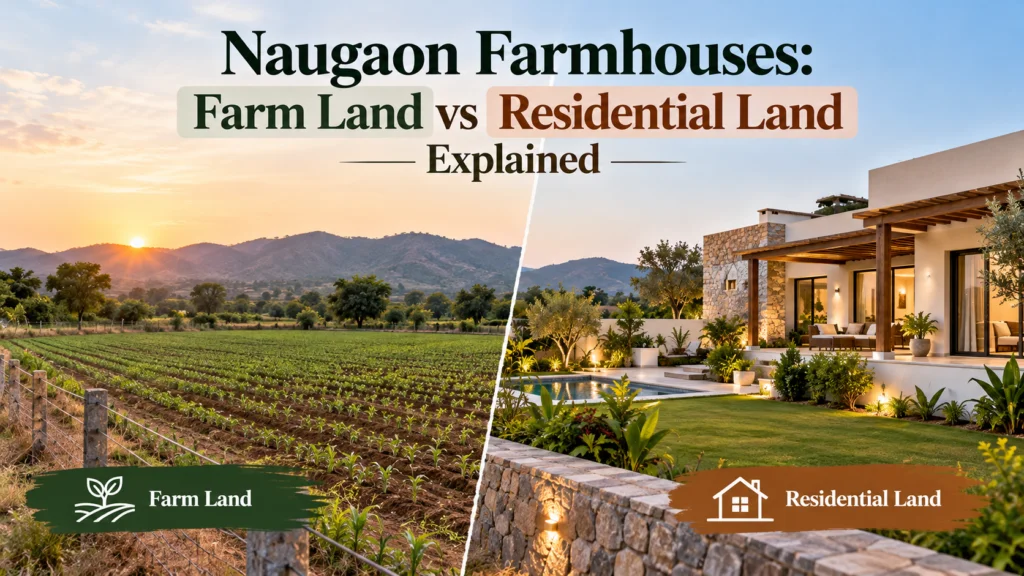
Farm land, broadly speaking, is land classified for agricultural purposes. In many states, this classification comes with restrictions on construction, you may be permitted to build limited structures directly related to agricultural use, like a basic farmhouse for personal use while managing the land, but not a full-scale residential property in the way you might picture.
Rules around exactly what’s permitted vary significantly by state and even by specific local regulations, so what’s allowed on agricultural land in one area may be quite different from another. This is exactly why generic assumptions, based on what you’ve heard about “farmhouses” elsewhere, can be misleading if they don’t match the specific local rules.
What Residential Land Actually Means
Residential land, by contrast, has already been classified and approved specifically for home construction. This typically means fewer restrictions on the kind of structure you can build, and a more straightforward process when it comes to approvals, since the land’s intended use already aligns with your plans.
Residential classification often comes at a higher price point than equivalent agricultural land, partly reflecting this reduced restriction and more straightforward usability.
Why This Distinction Matters So Much for Buyers
It Determines What You Can Actually Build
This is the most direct, practical impact. If you’re picturing a full residential farmhouse with multiple rooms, proper amenities, and long-term livability, but the land is classified purely as agricultural, you may face significant restrictions on what’s actually permitted, restrictions that aren’t always obvious just from looking at the land itself.
It Affects Future Resale and Transfer
Land classification can also impact how easily a property can be resold or transferred later, and to whom. Some agricultural land classifications come with restrictions on who can purchase it, which can narrow your pool of potential future buyers compared to residential land.
It Affects Loan and Financing Options
Banks and financial institutions often treat agricultural and residential land differently when it comes to financing. Residential land is frequently easier to secure a loan against, since its usage is more clearly defined and aligned with typical home loan purposes.
It Shapes What Approvals You’ll Need
Building on agricultural land, where permitted at all, may require specific approvals or conversion processes before construction can proceed. Skipping this step, or assuming it’s unnecessary, can lead to serious complications later, including potential legal issues with the structure itself.

Questions Worth Asking Before You Buy in Naugaon
What Is This Specific Plot’s Current Classification?
Don’t assume based on general appearance or what a seller tells you verbally. Ask for the specific, documented land classification, and verify it independently through official local records where possible.
If It’s Agricultural, Has It Been Converted, or Would It Need To Be?
Some agricultural land has already gone through a formal conversion process to permit residential construction. Others haven’t, and would require this process before you could legally build what you’re envisioning. Understanding which situation applies to your specific plot matters enormously.
What Specifically Are You Allowed to Build on This Land?
Get clarity on exact permissions, not a vague sense that “farmhouses are generally fine here.” Different classifications and conversion statuses permit genuinely different things.
Has the Seller Provided Documentation, or Just Verbal Reassurance?
Always ask for the actual, official land record documentation showing classification, rather than relying on what you’re told verbally during a site visit or sales conversation.
A Simple Way to Think About the Trade-Off
Agricultural land is often more affordable, and for buyers specifically planning something genuinely limited in scope, perhaps a modest structure alongside actual agricultural or gardening use, it can be a reasonable, cost-effective choice, provided local rules genuinely permit what you’re planning.
Residential land typically costs more, but offers more straightforward construction permissions and generally smoother resale potential, better suited to buyers planning a full, comfortable home as their primary goal, without wanting to navigate conversion processes or usage restrictions.
Common Mistakes Buyers Make With This Distinction
Assuming All “Farmhouse” Land Is the Same
The word “farmhouse” gets used loosely in marketing, sometimes referring to land that’s properly residential-classified and designed for full home construction, other times referring to land that’s technically agricultural with construction limitations. Never assume based on the marketing term alone.
Not Verifying Classification Independently
Relying entirely on what a seller or agent tells you, without checking official land records yourself or through a property lawyer, is one of the most common and most costly mistakes buyers make here.
Skipping Conversion Verification
If land was supposedly converted from agricultural to residential use, verify this was done properly and is documented, rather than simply accepting a seller’s claim that it’s “basically residential now.”
Building Without Proper Approvals
Even where some construction is technically permitted on agricultural land, skipping required approvals or conversion processes can create serious legal complications later, sometimes affecting the structure’s legitimacy entirely.
A Simple Checklist Before You Buy
- Confirm the specific, documented land classification for this exact plot
- If agricultural, check whether it’s been formally converted for residential use
- Get clear, specific information on what construction is actually permitted
- Verify all documentation independently, not just through verbal assurance
- Consult a local property lawyer familiar with Rajasthan’s specific land regulations
Final Thoughts
Farm land and residential land aren’t interchangeable, even when marketing language sometimes blurs the line between them. The classification directly shapes what you can build, how smoothly you can finance and eventually resell the property, and what approvals you’ll genuinely need along the way. Taking the time to verify this properly, rather than relying on general assumptions, protects you from discovering a serious limitation only after you’ve already committed.
If you’re exploring farmhouse options in Naugaon and want clarity on land classification before you commit, it helps to ask detailed, specific questions and verify documentation independently. Explore current options through Naugaon Farmhouses, and don’t hesitate to ask exactly what classification and permissions apply to any specific plot you’re considering.